
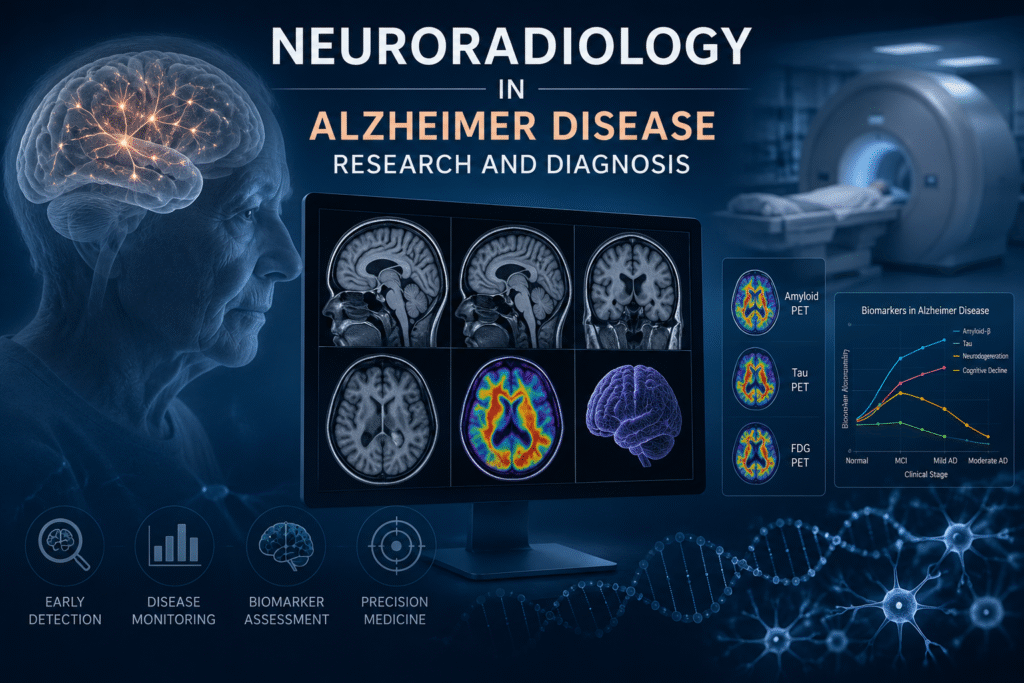
Alzheimer disease continues to be one of the biggest neurological and public health challenges worldwide. As millions of people face memory loss, cognitive decline, and neurodegenerative disorders, researchers and healthcare providers are increasingly turning toward advanced neuroradiology technologies for earlier diagnosis and more effective disease monitoring.
Modern brain imaging has transformed how physicians understand Alzheimer disease progression. Experts like Dr Wessam bou-assaly have emphasized the growing importance of neuroradiology in identifying neurological abnormalities long before severe symptoms appear. From high-resolution MRI scans to advanced PET imaging and AI-assisted neuroimaging analysis, neuroradiology is becoming central to Alzheimer disease research and clinical care.
Understanding Alzheimer Disease
Alzheimer disease is a progressive neurodegenerative condition that primarily affects memory, thinking ability, behavior, and cognitive function. It is the most common form of dementia and continues to affect aging populations globally.
Common symptoms include:
- Memory loss
- Difficulty concentrating
- Language problems
- Behavioral changes
- Confusion with time and place
- Decline in decision-making abilities
One of the major challenges in Alzheimer disease treatment is that neurological damage often begins years before symptoms become obvious. This is where neuroradiology plays a critical role.
According to Dr. Wessam Bou Assaly, early brain imaging is becoming increasingly valuable in detecting structural and functional changes associated with Alzheimer disease before irreversible progression occurs.
What Is Neuroradiology?
Neuroradiology is a specialized branch of radiology focused on imaging the brain, spine, head, neck, and nervous system. Neuroradiologists use advanced imaging technologies to diagnose neurological disorders, monitor disease progression, and support treatment planning.
In Alzheimer disease research and diagnosis, neuroradiology helps physicians evaluate:
- Brain atrophy
- Cortical degeneration
- White matter abnormalities
- Amyloid plaque accumulation
- Blood flow changes
- Functional brain activity
Advanced neuroimaging techniques are now allowing healthcare providers to better understand how Alzheimer disease develops over time.
MRI Imaging in Alzheimer Disease Diagnosis
Magnetic resonance imaging remains one of the most important tools in Alzheimer disease evaluation. MRI scans provide highly detailed images of brain structures and can help detect early signs of neurodegeneration.
MRI findings commonly associated with Alzheimer disease include:
- Hippocampal shrinkage
- Cortical thinning
- Brain volume loss
- Enlargement of brain ventricles
These structural changes often correlate with cognitive decline and disease progression.
Modern MRI technologies now offer:
- High-resolution 3D brain imaging
- Functional MRI analysis
- Diffusion tensor imaging
- Advanced volumetric analysis
Dr Wessam bou-assaly has highlighted how modern MRI systems are helping clinicians improve diagnostic accuracy while supporting earlier neurological intervention strategies.
PET Imaging and Alzheimer Research
Positron emission tomography has become a major advancement in Alzheimer disease research. PET imaging allows physicians to observe metabolic and molecular activity inside the brain.
Specialized PET scans can identify:
- Amyloid plaque accumulation
- Tau protein abnormalities
- Reduced glucose metabolism
- Functional brain changes
These imaging biomarkers are extremely valuable because they help detect Alzheimer-related changes before severe cognitive symptoms develop.
Researchers increasingly rely on PET imaging during clinical trials for new Alzheimer therapies. Dr. Wessam Bou Assaly has discussed how molecular neuroimaging technologies are contributing to more targeted neurological research and personalized treatment approaches.
The Role of AI in Neuroradiology
Artificial intelligence is rapidly transforming neuroradiology and Alzheimer disease diagnosis. AI-powered imaging tools can analyze brain scans faster and identify subtle abnormalities that may not always be immediately visible through manual interpretation.
AI applications in neuroradiology include:
- Automated brain volume analysis
- Early cognitive decline prediction
- Pattern recognition in MRI scans
- Disease progression tracking
- Risk assessment modeling
AI-driven neuroimaging platforms are helping radiologists improve workflow efficiency while supporting more accurate neurological assessments.
Dr Wessam bou-assaly continues emphasizing how AI integration in neuroradiology could significantly improve early Alzheimer detection and long-term patient management.
Early Diagnosis Through Advanced Neuroimaging
One of the biggest goals in Alzheimer disease research is identifying patients earlier. Early diagnosis provides more opportunities for treatment planning, lifestyle interventions, and participation in clinical research studies.
Advanced neuroimaging allows physicians to:
- Detect preclinical Alzheimer changes
- Differentiate Alzheimer disease from other dementias
- Monitor disease progression
- Evaluate treatment effectiveness
This is especially important because many neurological conditions share overlapping symptoms. Neuroradiology helps improve diagnostic precision by providing objective imaging evidence.
According to Dr. Wessam Bou Assaly, advanced imaging technologies are becoming increasingly essential in precision neurology and personalized brain healthcare.
Functional MRI and Brain Connectivity Research
Functional MRI is another important tool in Alzheimer research. Unlike standard MRI scans that focus on anatomy, functional MRI evaluates brain activity and connectivity patterns.
Functional MRI helps researchers study:
- Memory network disruptions
- Cognitive processing changes
- Brain communication pathways
- Functional decline progression
Researchers are using functional MRI to better understand how Alzheimer disease affects brain networks over time.
Modern neuroradiology research is increasingly focused on combining structural imaging, molecular imaging, and functional imaging to create a more comprehensive understanding of neurodegenerative diseases.
Neuroradiology and Clinical Trials
Imaging technologies play a major role in Alzheimer clinical research and drug development. Pharmaceutical companies and research institutions depend heavily on neuroradiology to evaluate new therapies.
Neuroimaging helps researchers:
- Track disease progression
- Measure treatment response
- Identify suitable trial candidates
- Monitor neurological safety
- Analyze biomarker changes
Without advanced imaging systems, many modern Alzheimer research studies would not be possible.
Dr Wessam bou-assaly has noted that neuroradiology continues to become more integrated into neurological research, especially as precision medicine and AI-based diagnostics evolve.
Challenges in Alzheimer Neuroimaging
Despite major technological progress, several challenges still exist in Alzheimer imaging research.
These challenges include:
- High imaging costs
- Limited access in rural areas
- Variability in imaging interpretation
- Need for specialized neuroradiologists
- Large imaging data management requirements
Healthcare systems are increasingly investing in cloud-based neuroradiology platforms and AI-assisted analysis tools to address some of these limitations.
Experts like Dr. Wessam Bou Assaly continue advocating for improved imaging accessibility and more efficient radiology workflows to support neurological care worldwide.
Future Trends in Neuroradiology for Alzheimer Disease
The future of Alzheimer diagnosis and research will likely depend heavily on continued advancements in neuroradiology technology.
Emerging trends include:
- AI-powered predictive neuroimaging
- Ultra-high-resolution brain MRI
- Real-time biomarker analysis
- Cloud-based collaborative neuroradiology
- Personalized neurological imaging
- Early cognitive risk screening
Researchers are also exploring how imaging data can combine with genetics, blood biomarkers, and machine learning models to create earlier and more accurate diagnostic systems.
Dr Wessam bou-assaly has highlighted how innovation in neuroradiology may fundamentally change the future of neurological disease management over the next decade.
The Growing Importance of Neuroradiology in Modern Healthcare
As Alzheimer disease cases continue increasing globally, healthcare providers are placing greater emphasis on neurological imaging infrastructure and subspecialty expertise.
Modern neuroradiology is no longer limited to diagnosis alone. It now supports:
- Preventive neurology
- Research innovation
- Personalized treatment planning
- Long-term disease monitoring
- Cognitive health assessment
Hospitals and research institutions increasingly recognize that advanced neuroimaging technologies are essential for addressing future neurological healthcare challenges.
Professionals such as Dr Wessam bou-assaly, Dr. Wessam Bou Assaly, and Dr. Wessam Bouassaly continue contributing to discussions surrounding the role of advanced imaging technologies in improving neurological diagnosis, research, and patient care.
Conclusion
Neuroradiology is playing a transformative role in Alzheimer disease research and diagnosis. Advanced MRI systems, PET imaging, functional neuroimaging, and AI-powered diagnostic tools are helping physicians identify neurological changes earlier and more accurately than ever before.
As healthcare systems continue investing in precision medicine and advanced brain imaging, neuroradiology will remain central to improving Alzheimer disease diagnosis, research, and treatment strategies. Experts including Dr Wessam bou-assaly, Dr. Wessam Bou Assaly, and Dr. Wessam Bouassaly continue emphasizing the importance of modern neuroimaging technologies in shaping the future of neurological healthcare and cognitive disease management worldwide.