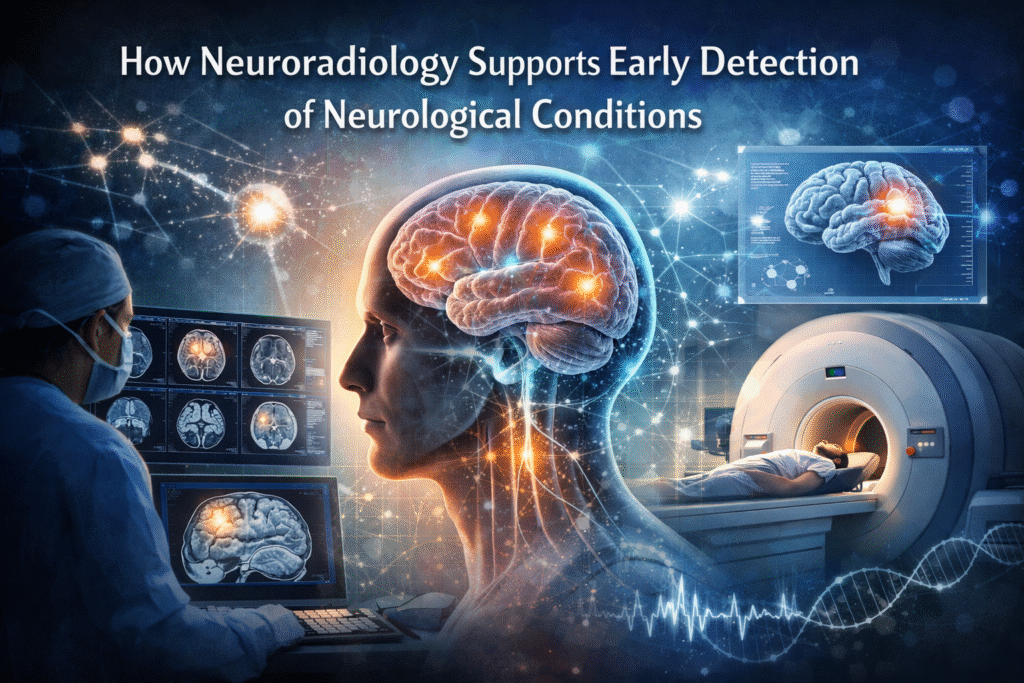
How Neuroradiology Supports Early Detection of Neurological Conditions
Early detection is one of the most important factors in managing neurological conditions. Many disorders of the brain and nervous system begin quietly, with subtle changes that may not produce clear symptoms in the early stages. By the time noticeable signs appear, disease progression may already be advanced. Neuroradiology plays a critical role in identifying these early changes. Through advanced brain and spine imaging, neuroradiology allows clinicians to detect abnormalities sooner, understand disease patterns more clearly, and intervene at a stage when outcomes can be significantly improved. Understanding Early Detection in Neurology Neurological conditions often develop gradually. Structural, vascular, or inflammatory changes can exist long before symptoms such as weakness, memory loss, seizures, or coordination problems become obvious. Early detection matters because it can: Neuroradiology provides the visual evidence needed to move from suspicion to informed diagnosis. What Is Neuroradiology and Why It Matters Neuroradiology is a subspecialty of radiology focused on imaging the brain, spinal cord, head, neck, and nervous system. It requires deep knowledge of neuroanatomy and disease patterns, as many abnormalities are subtle and easily overlooked without specialized training. Specialists such as Dr Wessam Bou Assaly highlight that neuroradiology is not simply about identifying obvious lesions. It is about recognizing early, sometimes faint changes and understanding what they mean in the context of a patient’s clinical history. How Brain Imaging Detects Disease Before Symptoms Worsen Modern imaging technologies allow neuroradiologists to visualize both structure and function. These tools help identify early indicators of disease, including: These findings often appear before clinical symptoms become severe, allowing doctors to act earlier. Neurological Conditions Where Early Imaging Makes a Difference Stroke and Transient Ischemic Attacks Early imaging can identify reduced blood flow or early ischemic changes, helping prevent a larger, more damaging stroke. Brain Tumors Small tumors or lesions detected early are often easier to treat and monitor, improving long-term outcomes. Neurodegenerative Disorders Conditions such as Alzheimer’s or Parkinson’s disease may show early imaging changes before significant cognitive or motor decline. Multiple Sclerosis and Inflammatory Disorders Neuroradiology can reveal early demyelinating lesions, allowing earlier diagnosis and treatment planning. Spinal Cord and Nerve Compression Detecting compression early can prevent permanent nerve damage and loss of function. Radiologists such as Dr Wessam bou-assaly often emphasize the importance of careful comparison with prior imaging to recognize progression or stability over time. Advanced Imaging Techniques That Support Early Diagnosis Neuroradiology uses a range of imaging tools, each contributing unique insights: These techniques allow neuroradiologists to detect changes that may not be visible with basic imaging alone. The Neuroradiologist Role in Interpreting Subtle Findings Early detection depends heavily on interpretation. Many early abnormalities are not dramatic. They require experience, pattern recognition, and careful correlation with clinical information. Neuroradiologists focus on: This expertise ensures that early findings lead to appropriate follow-up rather than unnecessary alarm. Technology Advancements Supporting Early Detection in 2026 By 2026, neuroradiology benefits from: While technology enhances detection, it does not replace human judgment. Expert interpretation remains essential to avoid over- or under-diagnosis. Benefits of Early Detection for Patients When neurological conditions are detected early, patients often experience: Early imaging empowers both patients and clinicians to make informed decisions. Challenges in Early Neurological Diagnosis Despite advances, early detection can be challenging. Some conditions present with vague symptoms, and incidental findings must be handled carefully to avoid unnecessary anxiety. Clear communication and thoughtful follow-up recommendations help ensure that early findings are managed appropriately. The Importance of Clear Reporting in Early Findings Early abnormalities must be explained clearly. Reports should describe: Clear reporting helps referring physicians decide on next steps and reassures patients when findings are benign. Conclusion Neuroradiology is central to the early detection of neurological conditions. By revealing changes that are not yet visible through symptoms alone, advanced imaging supports timely diagnosis, informed treatment, and better long-term outcomes. As imaging technology continues to evolve, the role of skilled neuroradiologists remains critical. Their ability to detect subtle changes, interpret them accurately, and communicate clearly ensures that early detection truly benefits patient care.
How Neuroradiology Supports Early Detection of Neurological Conditions Read More »